SHE STAYED BEHIND
Westbridge Academy. Wednesday afternoon, 26 November, 15:40.
Hear enough to refer. Stop before you hear too much.
Based on Keeping Children Safe in Education 2025 — Part 1, para 29–45 and Annex B
Estimated time: 25–30 minutes
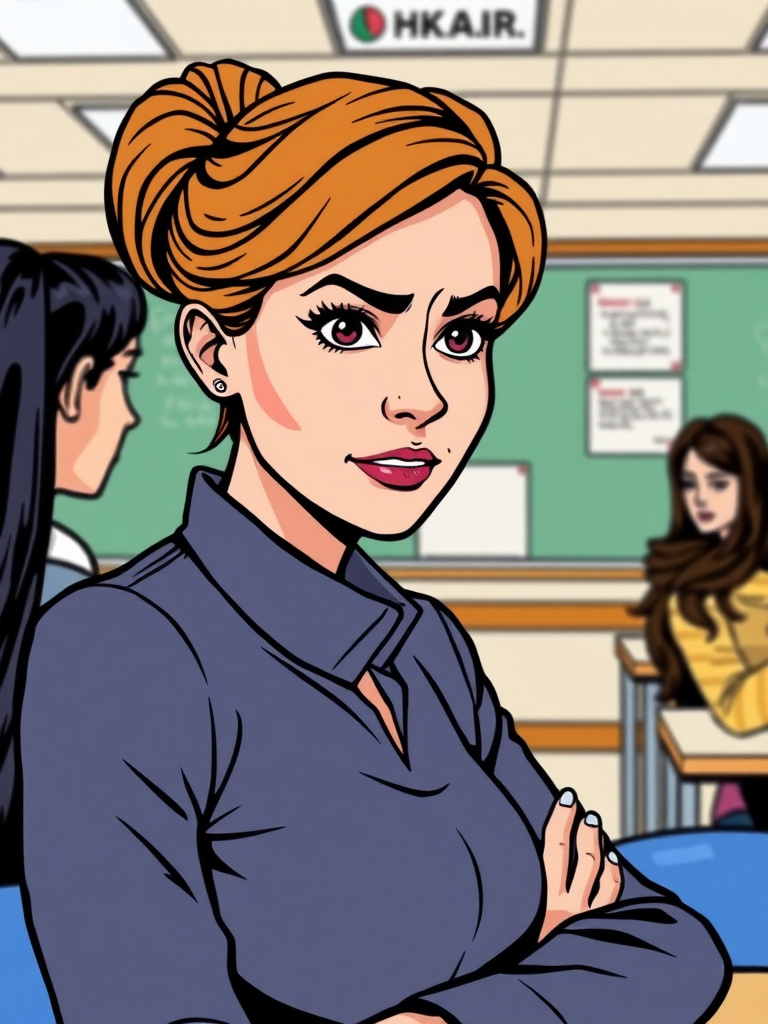
YOUR ROLE
Sarah Donnelly
PSHE Teacher, Year 10 · Westbridge Academy
You are Sarah Donnelly, PSHE Teacher at Westbridge Academy. It is Wednesday, 26 November, 3:40 PM. The last period has just ended. Your Year 10 PSHE class has been covering the 'Healthy Relationships' unit this half-term — consent, coercion, peer pressure.
The classroom has emptied out. Emily Carter is still in her seat.
SCHOOL CONTEXT
- → Child-on-child abuse is defined in KCSiE 2025 as abuse perpetrated by one child against another — including sexual harassment, sexual violence, and online abuse between peers. It is never acceptable and should never be dismissed as 'banter.'
- → The DSL at Westbridge is Mr Sutton (Deputy Head). He handles all child protection referrals and is the first and only point of contact when a disclosure is made.
- → The ABE (Achieving Best Evidence) interview is a formal police interview technique for child witnesses. Prior questioning by non-trained staff before an ABE interview can contaminate the child's account and reduce its evidentiary value.
- → Schools have a dual obligation: support the victim through a safeguarding process and assess the needs of the alleged perpetrator separately — in parallel.
- → KCSiE is explicit: the school does not wait for a police investigation to conclude before taking its own safeguarding action. Both processes run in parallel.

Wednesday Afternoon — After PSHE
Emily doesn't move when the others leave. She waits until the last person is out of the door.
She looks up. "Miss — can I tell you something?"
A pause. You say yes.
Emily Has Just Told You
What do you do now?
You Ask. She Answers.
WHAT WENT WRONG
The principle is minimum necessary information. What is 'minimum necessary'? Enough to know that you need to refer. Emily told you: messages, physical contact, she said stop, she wasn't believed. That was enough.
The ABE interview is designed to draw out the best possible account from a child using specialist techniques. Every question you asked before that interview is now something the interviewer has to navigate around.
KCSiE 2025 — Part 1, para 29–45 and Annex B
You Cut Her Off
WHAT WENT WRONG
Stopping a child mid-disclosure can make them feel dismissed or frightened by the speed of the response. Emily came to you because she trusted you. Being cut off — however well-intentioned — can read as 'this is too big for me to handle.'
The correct approach: let the child finish saying what they came to say, without follow-up questions, and then calmly take them to the DSL. Stop the questions — not the disclosure.
KCSiE 2025 — Part 1, para 29–45 and Annex B
You Let Her Finish. Then You Move.
CORRECT APPROACH
Emily finished what she came to say. You listened, you believed her, you didn't ask questions — and you took her to the DSL immediately.
The word 'spontaneous' in a safeguarding record matters. It means the child's account wasn't shaped by someone else's questions before it was formally taken. That is the cleanest possible start to a formal process.
KCSiE 2025 — Part 1, para 29–45 and Annex BOn the Way to Mr Sutton
You're walking Emily to Mr Sutton's office. It's the end of the school day — the corridor is busy.
Halfway there, you pass the Year 10 common room. Through the window, you can see Ryan — the boy Emily named — laughing with a group of friends. He has his back to you.
Emily doesn't look at him. But you do.
Ryan Is Right There
What do you do about Ryan?
Ryan Knows
WHAT WENT WRONG
A tip-off — however brief — gives the alleged perpetrator time to delete evidence, coordinate a story with friends, or intimidate the person who reported. Ryan knew within three minutes of Emily's disclosure that a complaint existed.
KCSiE's parallel process principle exists precisely for this reason: the alleged perpetrator is assessed and managed separately, by the DSL, using a process designed to avoid contamination. That process hadn't started yet.
KCSiE 2025 — Part 1, para 29–45 and Annex B
You Walk Past
CORRECT APPROACH
The DSL manages both processes. Your role — from this point — is Emily. The parallel process for Ryan is the DSL's responsibility, not yours.
The fact that you walked past without saying anything means Ryan's phone is intact, his account is uncoordinated, and the investigation starts clean.
KCSiE 2025 — Part 1, para 29–45 and Annex B
The Indirect Tip-Off
WHAT WENT WRONG
The message didn't reach Ryan in time — but it reached his form tutor. That's now a second member of staff with partial knowledge of an active case, no context, and no training in how to manage it.
The DSL manages who knows what about an active safeguarding case, and when. Taking action to detain or delay an alleged perpetrator — however well-intentioned — is the DSL's call to make, not yours.
KCSiE 2025 — Part 1, para 29–45 and Annex BIn Mr Sutton's Office
Emily has told her account to Mr Sutton. He's been thorough but careful.
As Emily finishes, Mr Sutton glances at you. "Can you wait outside for a moment?"
He closes the door. You wait in the corridor. Five minutes later, he opens it again.
Mr Sutton explains: the school has two separate processes running from tonight. One for Emily. One for Ryan. Neither waits for the other. He turns to you. "Your role from here is Emily's pastoral support — following the plan I'll set out. That's all. I'll manage everything else."

What Is Sarah's Role Now?
How do you approach your role from here?
You Step Back
WHAT WENT WRONG
KCSiE is explicit: the school does not wait for a police investigation before taking its own safeguarding actions. The pastoral support plan is a school action — it runs in parallel with everything else, from day one.
Emily chose Sarah because she trusted her. Disappearing from that relationship — even with good intent — is a form of abandonment that the pastoral plan was designed to prevent.
KCSiE 2025 — Part 1, para 29–45
You Work the Plan
CORRECT APPROACH
The pastoral plan keeps Sarah involved — which is right, because Emily chose her — but within a structure that prevents the relationship from becoming a parallel investigation.
KCSiE does not ask teachers to stay out of Emily's life while the formal process runs. It asks them to stay in Emily's life without running their own version of the process alongside it.
KCSiE 2025 — Part 1, para 29–45
Daily Check-Ins
WHAT WENT WRONG
Pastoral support that isn't structured becomes pastoral conversation — and pastoral conversation with a child in an active safeguarding case is unmanaged contact.
The DSL's plan would have anticipated this kind of question and given Sarah a prepared response. Ad hoc contact removes that protection — from Sarah, and from Emily.
KCSiE 2025 — Part 1, para 29–45PUT THEM IN ORDER
The NSPCC's 5 Rs framework — endorsed by KCSiE 2025 — describes the correct approach to receiving a child's disclosure.
Use the arrows to arrange the five principles in the correct order, then submit.
WHY THE ORDER MATTERS
Each step protects the next one. Receiving without interrupting means the child tells their own story. Reassuring without promising confidentiality keeps them informed. Responding with minimum questions preserves the integrity of any formal interview. Referring immediately means the trained professional takes over before the disclosure expands. Recording accurately — in the child's words — creates the most useful document for anyone who reads it later.
The most common error is jumping from Receive to Respond, skipping Reassure — which can make the child feel interrogated rather than believed.
WRITE THE RECORD
You're at your desk. Emily has just left. You have to log what happened — now, while it's fresh. The DSL will read this within the hour.
RULES OF A GOOD RECORD
- → Time, date, location.
- → Child's words in direct quotes — don't paraphrase.
- → Facts only. No interpretation, no labels, no "I think".
- → Sufficient detail for the DSL to act on.
words
YOUR RECORD — SCORED
MODEL ENTRY — FOR COMPARISON
26/11 — 15:41, PSHE classroom (Rm 204). Emily Carter (Y11) stayed behind after the lesson. She said, "Can I tell you something?" She then said: "Ryan's been sending me messages. Sexual ones. Like, really explicit. And last week in the corridor after maths — he grabbed me. Here." She touched her own upper arm, near the shoulder. She said she told him to stop and "he laughed". She said she "didn't know who else to tell". No questions asked beyond confirming she wanted to tell me. I told her I was glad she told me, that I couldn't keep it just between us, and I would take it to Mr Sutton (DSL) immediately. She agreed. Went directly to DSL office at 15:47. This log entered at 15:52.
Notice: time, location, direct quotes, observed actions ("touched her arm"), no interpretation ("upset", "abused"), explicit note of what you did next and when.
DECISION 1 — EMILY'S DISCLOSURE
DECISION 2 — RYAN IN THE CORRIDOR
DECISION 3 — SARAH'S ONGOING ROLE
SIX WEEKS LATER
CHILD-ON-CHILD ABUSE — FIVE RULES
What every member of staff needs to know
CHILD-ON-CHILD ABUSE IS NEVER 'BANTER'
KCSiE 2025 is explicit: child-on-child abuse — including sexual harassment, sexual violence, sending unwanted explicit messages, and non-consensual physical contact — is abuse. It is never acceptable and should never be dismissed as 'just how young people are', 'sorted out between themselves', or 'banter.' The impact on the victim is the same regardless of the perpetrator's age.
MINIMUM NECESSARY INFORMATION
You need enough information to understand that a concern exists and to refer it. That is usually one or two sentences from the child. Any question you ask beyond that point risks contaminating the ABE interview. The test is not 'do I understand everything?' — it is 'do I know enough to refer?' If yes: stop asking and refer. The word 'spontaneous' in a safeguarding record matters. It means the child's account wasn't shaped by someone else's questions before it was formally taken.
NEVER INFORM THE ALLEGED PERPETRATOR
Any contact with the alleged perpetrator — even a brief, well-intentioned word — before the DSL has started the parallel process is a tip-off. It gives them time to delete evidence, coordinate accounts, or intimidate the child who reported. This includes indirect contact: a message to their form tutor is still a partial disclosure of an active case. The DSL manages the alleged perpetrator's process. Your role is the child who came to you.
THE SCHOOL DOES NOT WAIT FOR POLICE
KCSiE is clear: the school's safeguarding actions — the pastoral plan, the risk assessment, the timetable adjustments — run in parallel with any police investigation. The school does not pause its own safeguarding duties pending a police or criminal outcome. This may mean supporting the victim and assessing the alleged perpetrator before any criminal process concludes, or even begins. Structured pastoral support is a school action — not a post-investigation courtesy.
FGM — MANDATORY AND NON-DISCRETIONARY
KCSiE 2025 specifically names Female Genital Mutilation, forced marriage, and honour-based abuse as forms of abuse that all staff should be aware of. FGM carries a mandatory reporting duty for teachers: if a teacher discovers or has reason to believe that FGM has been carried out on a girl under 18, they must report it to the police directly. This is not discretionary, not DSL-first, and cannot be overridden by the school. It is the only safeguarding duty in KCSiE that bypasses the usual referral process.
Developed in accordance with Keeping Children Safe in Education 2025 (KCSiE)
Part 1, para 29–45 · Annex B — Child-on-Child Abuse
blend.training