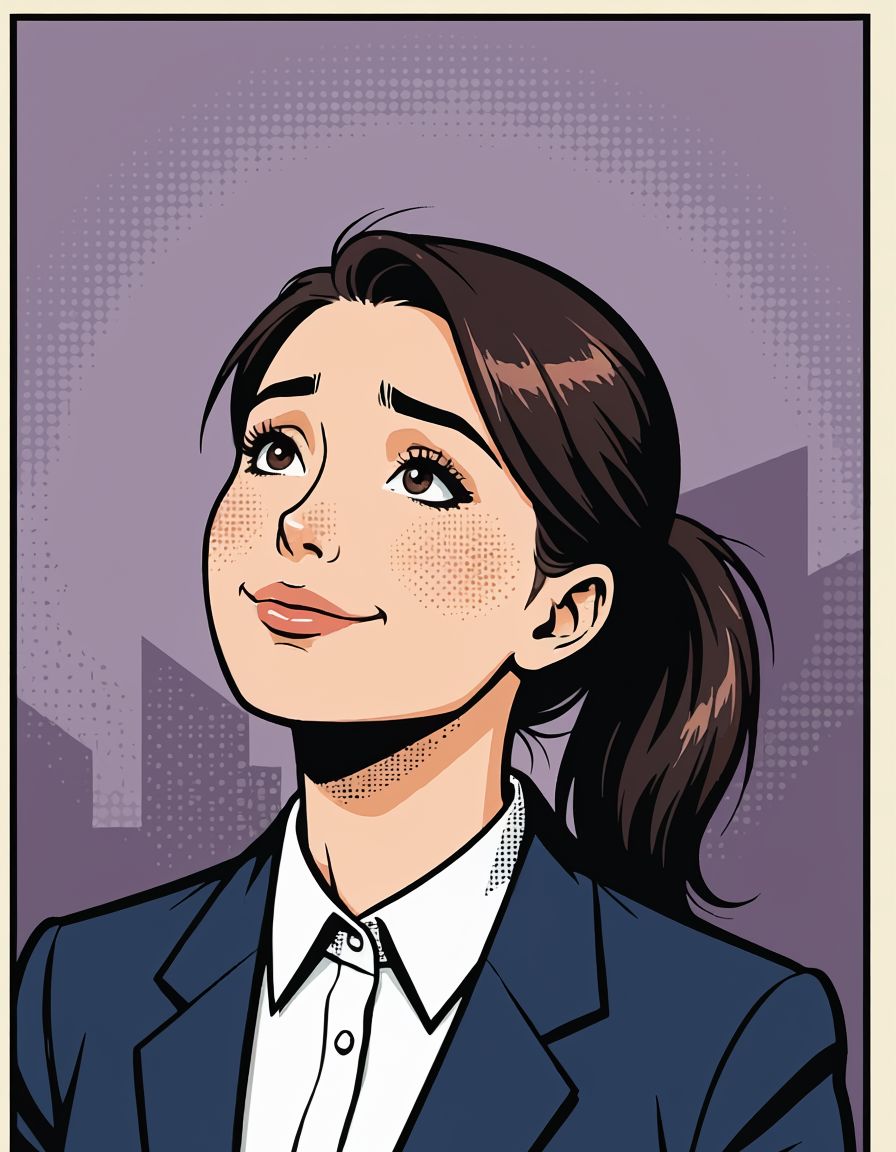
Wednesday. 8:52am. St. Catherine's Secondary School, Leeds.
Registration just finished. 28 students left. One didn't.
Based on Keeping Children Safe in Education 2025 (KCSiE) · Part 1 — All Staff
Estimated time: 15–20 minutes
YOUR ROLE
You are Mr Davies, Year 9 Form Tutor at St. Catherine's Secondary School. You've been teaching for six years. Your students trust you.
Form registration just finished. 28 students charged out towards Period 1. The corridor echoes with slamming lockers and shouting.
You're about to lock up and head to the staffroom when you notice someone hasn't left.
BEFORE YOU START
HOW THIS WORKS
This is a scenario-based knowledge check. You play Mr Davies making real safeguarding decisions — and every choice reveals how the law applies to that exact situation.
YOUR SCORE
Each decision is scored. Points accumulate as you move through the scenario. Your final score determines your safeguarding verdict.
TOP TIERSafeguarding Champion
MID TIERNeeds Development
CONCERNSerious Concerns
CONSEQUENCES EXPLAINED
After each decision you’ll see what the right response was and why — with the relevant KCSiE 2025 guidance. Even wrong answers teach.
CONFIDENCE RATINGS
At key moments you’ll rate your confidence before seeing the answer. This helps you identify where your knowledge gaps actually are.
NARRATOR
Maya Harrison, Year 9, is still here. Arms crossed tight, staring at the floor near your desk. Her blazer sleeves are pulled down over her hands.
You've taught Maya for two terms. Usually quiet but engaged. Lately, more withdrawn. Two weeks ago she flinched when another student touched her shoulder. You made a mental note but didn't follow up.
⏰ Period 1 starts in
BEFORE SHE SPEAKS
NARRATOR
Maya hasn't said anything yet. She's standing near your desk, looking at the floor. You have a few seconds before you need to respond. The small things you do right now will shape whether she opens up or walks away.
The environment you create before a child speaks matters as much as what you say after. Privacy, body language, and removing distractions signal that you're safe to talk to. KCSiE doesn't prescribe these — but experienced safeguarding professionals know they're essential.
MAYA, 14
She glances at the empty corridor. Her voice drops to almost nothing. Her hands are shaking.
⚠️ Direct disclosure of physical abuse. How do you respond?
A"I hear you, Maya. The most important thing right now is that you feel safe. Let's just focus on that for now."
B"Thank you for telling me, Maya. That took real courage. I have to be honest — I can't keep this just between us. But I'm going to make sure you're supported every step of the way."
C"That took a lot of courage. Before I do anything, I just want to make sure I understand what you're telling me — can you walk me through it?"
MAYA
"You're not angry?"
Her shoulders drop slightly. She uncrosses her arms. She's still scared — but she doesn't look alone any more.
YOU
"I'm not angry at all. I'm glad you told me. What you've described is not okay, and there are people whose job it is to help. I'm going to speak to Mrs Patterson — our safeguarding lead."
⚖ WHY THIS MATTERS
You've done exactly what KCSiE requires:
"Staff should reassure the victim that they are being taken seriously, that they will be supported, and that they did the right thing in reporting."
You did NOT promise confidentiality, did NOT question whether it happened, and did NOT investigate.
KCSiE 2025 — PARA 15, 16
MAYA
"Promise? You won't tell anyone?"
Maya relaxes. But you've made a promise you cannot keep. If you break it, you lose her trust. If you keep it, she stays in danger.
NARRATOR
You're trapped. You have a statutory duty to refer this to the DSL. But Maya thinks you've promised secrecy. When she finds out you told someone, the betrayal could make her refuse to disclose again — to anyone.
⚠ CRITICAL ERROR
"Staff should never promise a child that they will not tell anyone about a report of abuse, as this may ultimately not be in the best interests of the child."
Promising confidentiality feels kind. But it creates a barrier to the child getting help and puts you in direct breach of your statutory duty.
KCSiE 2025 — PARA 15
MAYA
"I… forget it. It doesn't matter."
Maya's face closes off. She picks up her bag and walks towards the door without looking back. You've lost the disclosure.
NARRATOR
By questioning the disclosure, you've communicated doubt. Maya took an enormous risk telling you. She now believes she's not believed. She may not try again. You still have a duty to report to the DSL — but the damage to Maya's trust is done.
⚠ CRITICAL ERROR
Staff are not investigators. Your role is to listen, reassure, and report — not to verify or probe.
"Staff should not ask leading questions, should listen carefully, and should not express disbelief."
KCSiE 2025 — PARA 16
ACT 2 — THE ESCALATION
WHAT NOW?
Maya is sitting quietly. She's scared, but she trusts you. You need to act on that trust — fast.Maya thinks you've promised to keep her secret. She's calm — but you know you can't keep that promise. You need to find the DSL without Maya realising you're about to break your word.Maya walked out. She's somewhere in the school. You still have a duty to act on what she told you — even though you handled the disclosure badly. The clock is ticking.
FACE-TO-FACE — CHOOSE YOUR WORDS
NARRATOR
Maya is looking at you. She told you the hardest thing she's ever said, and you didn't flinch. Now she needs to know what happens next. Choose your words carefully.Maya is looking at you expectantly. She thinks this is over — that you'll keep her secret. But you need to prepare her for the fact that you're about to break your promise. How you frame this will determine whether she cooperates or shuts down completely.Maya is gone. But you still need to report to the DSL. This section now focuses on what you tell Mrs Patterson's office when you get there.
SCAREDMAYA'S TRUSTSAFE
What do you say first?
"Maya, I know that took real courage. Thank you for trusting me with this."
"Okay Maya, I hear you. What I need to do now is follow procedure — I'm going to make some calls."
"I'm really sorry to hear that. Let me just get my class settled first and then we can talk properly."
What do you say next?
"I'm going to speak to Mrs Patterson — she's our safeguarding lead. She handles situations like this every week. You won't be in trouble, and I'll make sure you know what's happening."
"I'm going to get you some help, okay? Someone who knows what to do. Try not to worry."
"Look, I'm going to handle this personally. I'll speak to your mum after school and we'll get this sorted between us."
One last thing before you go:
"Maya — you are not in trouble. None of this is your fault. I'll be back in a few minutes. Ms Chen next door knows you're here."
"Wait here for me. I'll be as quick as I can. If you need anything, Ms Chen is next door."
"I need to go and sort this now. Stay here — and Maya, please don't tell anyone else what you've told me."
The way you speak to a child during a disclosure matters as much as the actions you take. KCSiE requires staff to reassure children that they are being taken seriously, will be supported, and did the right thing. Your tone shapes whether Maya cooperates with professionals or shuts down entirely.
KCSiE 2025 — PARA 15
EXPLORE THE CORRIDOR
Mrs Patterson's office is ahead. Where do you go?
🚪 MRS PATTERSON'S OFFICEClick to check🔒 LOCKED!
🏫 STAFFROOM
📞 WALL PHONE
← YOUR CLASSROOM
"Off-site CPD training all day. Back tomorrow. For urgent matters, contact Mr Walsh (Deputy DSL) — ext. 214."
🔒 Locked. Where do you go instead?
MR WALSH — DEPUTY DSL
"Good. You've handled this well. I'll see Maya now — from what you're telling me, she sounds like she trusted you with this. That makes my job easier. I may need to contact Children's Social Care today."
"You said you promised her confidentiality? Right. That's going to make this harder. When I speak to Maya and she finds out you've told me, she may feel betrayed. I'll handle it — but next time, never promise a child you won't tell anyone. It's the first thing in KCSiE."
"She walked out? Okay. Do you know where she went? … Right. I need to find her. The fact that she shut down after you questioned her means she may not cooperate with me either. This is going to be more difficult than it needed to be."
"Thank you for coming to me. I'll see Maya now. From what you're describing, she's quite anxious — how did she seem when you left her?"
NARRATOR
Mr Walsh takes immediate action. Maya is seen by a trained professional within the hour.Mr Walsh takes over, but he'll need to rebuild the trust you damaged by making a promise you couldn't keep. Maya may refuse to speak to him.Mr Walsh has to find Maya first. She's somewhere in the school, alone, after being questioned about the most difficult thing she's ever said. The process is already compromised.
⚖ CORRECT ESCALATION CHAIN
1. Deputy DSL → 2. Senior Leadership Team → 3. Children's Social Care directly
"If in exceptional circumstances the designated safeguarding lead (or a deputy) is not available, this should not delay appropriate action being taken."
KCSiE 2025 — PARA 53
NARRATOR
You slide a note under the door and walk back to your classroom. Maya goes to her lessons. The day continues as normal.
That evening, Maya goes home. To the same house. To the same person. Nothing has changed. No professional has been informed. If something happens tonight, the note under Mrs Patterson's door will not have protected her.
⚠ NO DELAY PERMITTED
"If in exceptional circumstances the designated safeguarding lead (or a deputy) is not available, this should not delay appropriate action being taken."
Every hour of delay is an hour Maya remains at risk.
KCSiE 2025 — PARA 50, 51, 53
NARRATOR
You call Maya's mum. She says: "I don't know what she's told you, but it's not like that. She exaggerates."
That evening, Maya's stepdad confronts her. He knows she's been talking. She told someone, and now that someone told her mum, and her mum told him. Maya's safety net just collapsed — and you pulled the thread.
⚠ DANGEROUS ERROR
Contacting the family before informing the DSL could put Maya at greater risk. The decision about parental contact must be made by the DSL, who will take advice from Children's Social Care.
KCSiE 2025 — PARA 51, 53, 55
ACT 3 — THE RECORD
WRITE IT DOWN
Mr Walsh has asked you to complete a safeguarding concern form. The record you write could be used by Children's Social Care, the police, or in court. Put the steps in the correct order.
PUT THESE STEPS IN ORDER
Drag (or use arrows) to arrange the safeguarding recording steps in the correct order, from first to last.
✓
The correct order ensures the record is accurate, contemporaneous, and usable by investigating agencies. Recording exact words (not summaries) preserves evidence. Noting time of disclosure (not time of writing) establishes the timeline. Facts and observations only — never opinions.
KCSiE 2025 — PARA 66
REVIEW THE FORM
Mr Walsh has drafted a safeguarding referral. Read each section and decide: does it contain an error, or is it correct?
There are 3 errors hidden in 5 sections.
📋 SAFEGUARDING CONCERN FORM
✓✗
A safeguarding record must contain: exact date and time of disclosure, the child's verbatim words (not a summary), factual observations only (no opinions or judgements), and actions taken. Errors in a safeguarding record can compromise investigations and court proceedings.
KCSiE 2025 — PARA 66
STAFF WHATSAPP — AFTER SCHOOL
SR
Ms Reynolds
online
Hey, everything ok? You looked really shaken this morning 😟
3:45 PM
What happened with that Year 9 girl? I saw Mr Walsh heading to your room earlierI heard Mr Walsh pulled a Year 9 out of Science? Someone said you were involved?A Year 9 girl was crying in the toilets at break. Was that something to do with your form this morning?
3:46 PM
3:47 PM ✓✓
3:48 PM
Yeah it was rough. A Year 9 girl told me her stepdad is hitting her and her mum. Reported it but been on my mind all day
Honestly not great. Had a difficult situation with a student this morning. Can't really say more but it's shaken me up a bit
Thanks for checking in. All fine — just had to deal with something being handled by SLT. Nothing I can share I'm afraid!
MS REYNOLDS
"Of course. Say no more. Glad you're okay."
⚖ NEED-TO-KNOW PRINCIPLE
Safeguarding information should only be shared with those who need it to safeguard the child. Casual sharing risks the information reaching the family or wider community.
KCSiE 2025 — PARA 78, 79
NARRATOR
By the end of the day, two other teachers have heard. By Thursday lunchtime, Maya knows the whole school is talking about her. She didn't want that. She told you. She'll never tell anyone anything again.
⚠ SERIOUS BREACH
You shared a child's disclosure with someone with no operational need to know. This breaches confidentiality and could compromise the investigation.
KCSiE 2025 — PARA 78, 79
NARRATOR
You haven't shared specifics. But by signalling distress, you've invited curiosity. Even vague references can lead to identification. If you need emotional support, speak to the DSL or use the school's staff wellbeing service.
⚠ UNDERSTANDABLE BUT RISKY
Your feelings are valid. But the staffroom is not the place to process them. Even vague references can lead to speculation.
KCSiE 2025 — PARA 78
MYTH OR FACT?
For each statement: is it FACT or MYTH? Then rate your confidence.
Your confidence rating won't affect your score — but it will reveal how well-calibrated your knowledge really is.
You said: — How confident are you?
✓ Correct!✗ Wrong.
⚠ You were confident about this one. That's the dangerous gap.
⚠ answer(s) you were confident about turned out to be wrong. This is the most dangerous pattern in safeguarding — acting with certainty on incorrect knowledge.
Your knowledge and your confidence are well calibrated. You know what you know — and you know what you don't.
MODULE 1 COMPLETE
BEFORE SHE SPEAKS: ENVIRONMENT
DECISION 1: THE DISCLOSURE
FACE-TO-FACE: YOUR WORDS
CORRIDOR: WHERE DID YOU GO?
ACTIVITY: RECORDING ORDER
DOCUMENT REVIEW: SPOT THE ERRORS
STAFF CHAT: WHAT DID YOU SHARE?
MYTH OR FACT: KNOWLEDGE CHECK
WHAT HAPPENED TO MAYA
Maya disclosed to you and you responded well. She felt heard.
Maya disclosed to you, but you promised confidentiality. When she later found out you'd told Mr Walsh, she felt betrayed. It took two more conversations before she was willing to speak to a social worker.
Maya tried to disclose, but you questioned whether she was telling the truth. She walked out. Mr Walsh had to find her and start the conversation from scratch — without the trust you could have built.
You found Mr Walsh immediately. He contacted Children's Social Care that morning.
You left a note and went back to your class. Maya went home that evening to the same house, the same person. Nothing happened until the next day.
You called Maya's mum. Her stepdad found out she'd spoken to someone. By the time professionals were involved, Maya had retracted everything.
Information was shared on a need-to-know basis. Maya's privacy was protected. The investigation proceeded without interference.
You shared Maya's disclosure in the staffroom. By Thursday, half the staff knew. Maya heard her name in the corridor. She stopped coming to school.
You didn't name Maya, but your visible distress made colleagues curious. One of them worked it out. The information spread.
KEY PRINCIPLES — KCSiE 2025
Never promise confidentiality to a child (Para 15)
Listen — don't question, investigate, or express disbelief (Para 16)
Report to the DSL immediately — no delay (Para 50, 51)
DSL unavailable → Deputy → SLT → Children's Social Care (Para 53)
Record exact words, facts only — no opinions (Para 66)
Share information on strict need-to-know basis (Para 78, 79)
Developed in accordance with Keeping Children Safe in Education 2025 · Part 1 All Staff
Children Act 1989 (s.17, s.47) · Education Act 2002 (s.175) · KCSiE 2025 Paras 12–16, 50–53, 66, 78–79