
Back to Our Work
Workplace Violence Prevention. Code Red to Audit
California SB 553 · OSHA general-duty clause · multi-state
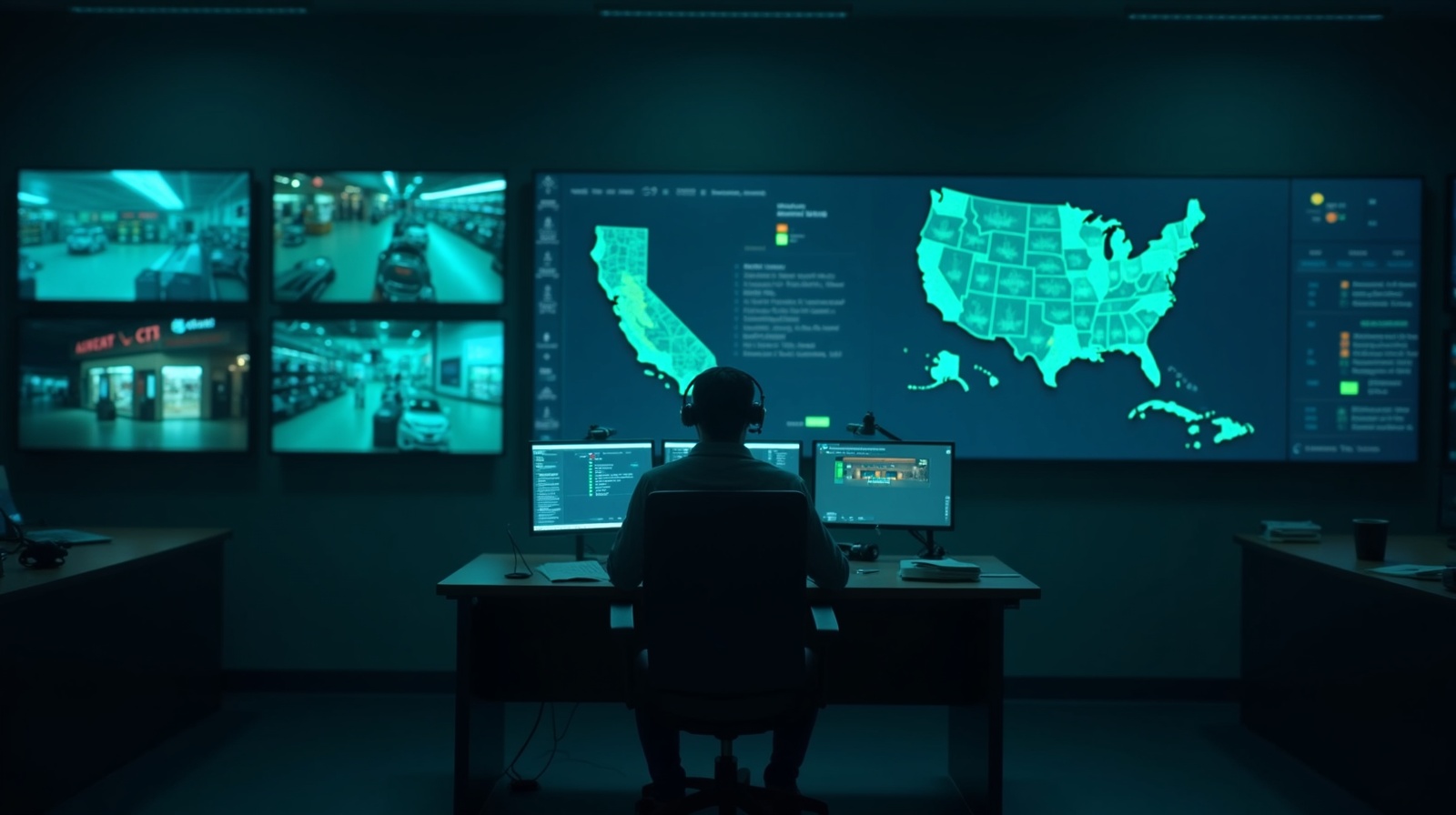
Read the full case study
Brief
Build a workplace-violence-prevention training product for the US retail sector that meets California SB 553's annual-training mandate and OSHA general-duty obligations, and that trains the operational skills the regulation actually depends on (not the vocabulary the off-the-shelf market sells). Five modules across one continuous incident: the Code Red call, the prevention-plan draft, the floor-level bystander window, the escalation-button decision, and the audit. One fictional retail chain (Korvus). One frontline cast (Kyle Novak, Diana Reyes, Marcus Chen, Sam Okafor) who carry across all five modules. Free playable Module 1 demo, no login.
Discovery & Analysis
The off-the-shelf workplace-violence market trains *recognition*: types of workplace violence, the four OSHA categories, the warning signs of escalation. Most products stop there. The skill that fails when a Type II (customer-on-employee) incident actually unfolds is operational: who tags the bystander, who hits the panic button, who clears the aisle, who stays with the de-escalating associate, and how the district manager gets briefed in time to make the next decision before the press cycle does. None of that is multiple-choice, and none of it is in the average 30-minute module.
The discovery brief was therefore: build a 5-module course set in one fictional retail chain (Korvus) with one continuous incident in Module 1, a customer escalation at the Sacramento store that crosses the threshold from verbal to physical. Follow the same characters through plan-drafting (Module 2), the bystander window on the floor (Module 3), the panic-button escalation decision (Module 4), and the OSHA / state regulator audit (Module 5). Train operational judgement, not vocabulary. Calibrate to California SB 553 plus OSHA general-duty plus state-specific overlays where relevant.
Design & Development
The course is one incident across five modules. Module 1 opens with a Code Red call from Korvus Sacramento #4: a customer escalation that has just crossed the threshold from verbal to physical. The same incident is then re-encountered from four other angles: the district manager drafting the prevention plan that should have caught it (Module 2), the new-hire bystander on the floor recognising the warning signs in real time (Module 3), the panic-button escalation decision (Module 4), and the OSHA / state regulator audit on the post-incident record (Module 5).
Design decisions:
• **Operational skills, not vocabulary.** Every module is built around a frontline cognitive task: drafting a plan element, recognising a multi-source bystander signal, deciding when to hit the button, defending the audit trail. Recognition-only knowledge is treated as table stakes, not the lesson.
• **One cast, five modules.** Kyle, Diana, Marcus, and Sam carry across the course. The Module 3 floor activity uses Kyle as the bystander and Diana as the radio voice, the same characters the learner met at the Code Red in Module 1.
• **Reaction-window intervention timing as the load-bearing teaching mechanic.** Module 3's bystander window is the moment the course either earns its US-retail audience or doesn't. Three verdict zones plus a separate no-click outcome, audio-only signal, no scrubbing.
• **CA SB 553 first; OSHA general-duty as fallback.** California is the strictest US regime for this content area; building to SB 553 plan-element specificity makes the course defensible in every other state. Where state-specific overlays matter (NY, IL, WA), they're surfaced as decision moments rather than sidebars.
Stack: native HTML/CSS/JS modules with cross-module SCORM carry-forward state, custom Node SCORM 1.2 build pipeline, multi-character TTS voicework (Kyle / Diana / Marcus / Sam across all five modules), AI-assisted scene and character generation, automated browser path-walking QA before ship. Reviewed and signed off by qualified US counsel before release.
Evaluation
The shipped product covers what 30-minute compliance videos cannot:
• **One incident, five modules, four roles.** The Sacramento Code Red in Module 1 is the same incident the district manager is post-mortem'ing in Module 2's plan draft, the same floor moment Kyle is recognising too late in Module 3's bystander window, the same call Diana is making in Module 4's panic-button decision, and the same record OSHA is reading in Module 5's audit. Cross-module state propagates: a thin Module 2 plan limits what's defensible at the Module 5 audit.
• **A reaction-window intervention timing engine on the retail floor.** Module 3's signature activity is a 4-verdict bystander-window scorer: too-early (cries-wolf undermines future signals), in-window (multi-source corroboration threshold crossed), too-late (incident now upgraded to a different procedure), no-click (procedural failure scored separately). Audio-driven, no scrubbing, no second guess.
• **CA SB 553 plan-element coverage as the spine.** Module 2 is a plan-drafting workshop covering hazard ID, employee involvement, training, recordkeeping, and post-incident debrief. Every required element is scored against the statute, not the marketing checklist.
• **Multi-character TTS voicework across the cast.** Kyle (new hire), Diana Reyes (district manager), Marcus, and Sam carry across all five modules with consistent voices. The radio feed in Module 3 lets two of them corroborate in real time as the bystander window opens.
• **SCORM 1.2 ready · 90 minutes total · free Module 1 demo.** Built for direct US-retail deployment and aggregator distribution (Go1, OpenSesame).
What this means for your organization
California SB 553 (effective July 2024) requires every covered US employer to maintain a Workplace Violence Prevention Plan and to train every employee on it annually. The off-the-shelf market is dominated by 30-minute compliance videos. This course trains the cognitive skill that decides whether a Code-Red call goes well or ends in OSHA general-duty enforcement: a frontline retail associate's first 90 seconds when a customer-on-employee escalation crosses the threshold from rude to physical.
See exactly where your training is leaking ROI.
A 5-minute diagnostic that scores your training across 6 dimensions — then gives you a personalised improvement plan. No email required.
1,000+ teams trained worldwide
Average 40% improvement in learning outcomes
Results in 5 minutes — no strings attached